

The Wallet Wars: Why 2025 Will Define the Future of Digital Payments
The Stakes Have Never Been Higher
A quiet war is being fought for the most valuable real estate in the digital economy: your phone’s home screen. Apple Pay, Google Pay, traditional banks, cryptocurrency wallets, super-apps, and countless fintech startups are all competing to become your primary payment method. The winner of this wallet war won’t just process transactions — they’ll sit at the center of how you manage money, make purchases, and interact with the financial system.
The prize? Access to trillions in annual payment volume, irreplaceable consumer data, and the ability to expand into adjacent financial services. The stakes are existential for traditional financial institutions and transformative for whoever wins.
How We Got Here
The concept of the “digital wallet” emerged gradually. Early versions were simply stored payment credentials for faster online checkout. Apple Pay and Google Pay added convenience for in-store purchases through NFC technology. But the wallet concept has evolved far beyond payments.
Modern digital wallets are becoming comprehensive financial management tools. They store payment methods, loyalty cards, tickets, identification, cryptocurrency, investment accounts, and increasingly, serve as authentication mechanisms for accessing other services.
In Asia, super-apps like WeChat Pay and Alipay already demonstrate the wallet’s potential. Users can pay bills, invest money, book travel, order food, call a taxi, and access government services — all through a single app. The West is now racing to catch up.
The Major Players and Their Strategies
Apple: Apple Wallet’s strategy leverages its hardware dominance. With billions of iPhone users, Apple has massive distribution and can integrate wallet functionality deeply into iOS. Apple’s adding identity credentials, transit cards, and expanding internationally. Their advantage: the seamless integration that comes from controlling hardware and software. Their weakness: Android users are excluded.
Google: Google Pay competes through broader platform availability and integration with Google’s ecosystem of services. Google’s strength is data — they know what you search, where you go, what you watch. Integrating payments gives them purchase data too. Their challenge: convincing users to switch from whatever they’re currently using.
Traditional Banks: Banks are fighting to keep wallet functionality within their own apps. They argue they’re more trustworthy, offer better fraud protection, and provide a complete view of your finances. Their advantage: existing customer relationships and regulatory expertise. Their disadvantage: bank apps are often poorly designed and lack the platform ecosystem advantages of tech giants.
Fintech Challengers: Companies like PayPal, Venmo, Cash App, and international players like Revolut are positioning themselves as the middle ground — better than banks at user experience, more trustworthy than pure tech companies on financial matters. They’re adding features rapidly: cryptocurrency, stock trading, savings accounts, credit products.
Newer entrants like SIQO are taking a different approach entirely — rather than choosing between traditional finance and crypto, or between single-currency and multi-asset, they’re building wallets that handle everything. The bet is that users don’t want to pick sides in these debates; they want tools that work with whatever assets they need to manage.
Cryptocurrency Wallets: Coinbase, MetaMask, and others argue that true financial sovereignty requires non-custodial wallets where users control their own keys. They’re the most radical reimagining of what a wallet should be, but face significant user experience and regulatory challenges.
Super-App Aspirants: Multiple companies, from Uber to Grab to Gojek, want to become the West’s answer to WeChat — a single app that handles transportation, food delivery, payments, and eventually everything else. The wallet is central to this vision.
What Users Actually Want
In this cacophony of competing visions, what do actual users care about?
Simplicity: The average person uses 6–10 different apps for financial services. They’d prefer one that works everywhere and does everything they need.
Security: Users want to know their money is safe, their data is protected, and if something goes wrong, there’s recourse. Trust is paramount in finance.
Universal Acceptance: A wallet is only as useful as the places you can use it. Network effects matter enormously — people use what merchants accept, merchants accept what people use.
Low Costs: Users are increasingly aware of fees and seeking options that minimize transaction costs, foreign exchange markups, and hidden charges.
Speed: In an age of instant everything, waiting 3–5 days for payments to clear feels archaic. Users expect real-time transactions.
Flexibility: Different situations call for different payment methods. Users want the flexibility to pay with credit, debit, bank transfer, or alternative payment methods depending on context. A freelancer might receive payment in USD from one client, EUR from another, and cryptocurrency from a third — they need a wallet that handles all three without forcing them to maintain separate accounts.
The Multi-Asset Imperative
One of the clearest trends in the wallet wars is the shift from single-currency to multi-asset management. Traditional wallets were built assuming users primarily transacted in one currency. That assumption no longer holds.
Consider a digital nomad working remotely while traveling. They might earn in USD, pay rent in Thai baht, have savings in EUR, and hold some cryptocurrency for international transfers. Managing this across four different wallets or apps creates unnecessary friction.
This is why platforms like SIQO are gaining traction — they recognize that modern users don’t fit into neat single-currency categories. The ability to hold, manage, and seamlessly move between multiple assets within one interface isn’t a premium feature anymore; it’s becoming a baseline expectation.
The wallet that wins won’t be the one that handles Bitcoin or handles dollars best. It’ll be the one that handles everything well.
The Technology Battleground
Several technological trends will determine the winner:
Interoperability: Can different wallet systems talk to each other? Open standards could prevent winner-take-all dynamics, but closed ecosystems offer better user experiences. This tension will shape the market.
Blockchain Integration: Whether cryptocurrencies succeed or fail, blockchain technology offers compelling features for payments: near-instant settlement, low costs, programmability. Wallets that incorporate these benefits while maintaining fiat currency stability could win significant market share.
Integrated payment gateways that work alongside wallet functionality are also critical. It’s not enough to store money — users need to send and receive it efficiently. Platforms combining wallet and gateway functionality offer a more complete solution than those focusing on just one aspect.
Biometric Authentication: Face ID and fingerprint authentication have made mobile payments secure and convenient. The next frontier is behavioral biometrics — systems that continuously verify it’s really you based on how you interact with your device.
AI and Personalization: Future wallets will use AI to optimize payment methods (choose the credit card with best rewards for this purchase), flag suspicious transactions, budget automatically, and offer contextual financial advice.
Offline Functionality: As wallets become more central, ensuring they work even without internet connectivity becomes critical. Technologies enabling offline transactions will differentiate leading wallets.
The Security Question
As wallets become more comprehensive, security becomes more critical. A wallet that holds multiple currencies and assets represents a more attractive target for attackers.
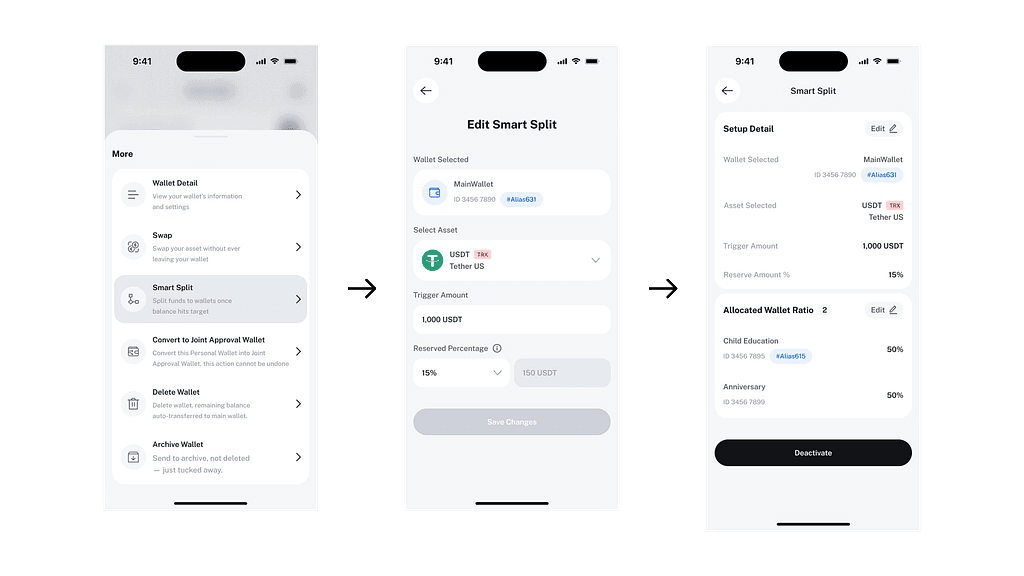
This is driving innovation in wallet security, including multi-signature authorization for high-value transactions. With multi-sig, important transfers require approval from multiple parties — adding a crucial layer of protection against both external attacks and internal fraud.
For businesses managing shared accounts or families overseeing joint finances, this isn’t optional. Multi-signature functionality is becoming a core requirement, not a nice-to-have feature.
The Regulatory Dimension
Regulators are watching the wallet wars carefully. When one company controls a dominant payment method, they gain enormous power over commerce. This raises antitrust concerns, especially when the wallet owner also operates marketplaces or other businesses.
The EU has been most aggressive, forcing Apple to open NFC access to competing wallets and investigating Google’s practices. US regulators are becoming more active as well. China’s dramatic regulatory intervention in its fintech sector — capping Alipay and WeChat Pay’s dominance — shows how quickly governments can reshape market dynamics.
Winning the wallet war requires not just technological superiority but navigating regulatory scrutiny successfully.
Why 2025 Is the Inflection Point
Several factors make 2025 critical:
CBDC Rollouts: Multiple countries are launching or piloting Central Bank Digital Currencies. How these integrate (or compete) with private wallets will shape the landscape.
Regulatory Decisions: Major antitrust and competition cases will be decided in the next 12–18 months, potentially forcing platform changes that alter competitive dynamics.
Cryptocurrency Maturation: Whether crypto becomes mainstream or remains niche will be clearer. This determines whether crypto-native wallets compete seriously or remain specialized tools.
Infrastructure Investments: Major platforms are making billion-dollar investments in wallet functionality. These bets will either pay off or fail in the next few years.
Consumer Habits: Payment habits formed now tend to stick. Whichever platforms capture users in 2025 will have significant advantages going forward.
What’s at Stake
The wallet war isn’t just about payments — it’s about platform power. The primary wallet on your phone becomes your interface for commerce, your identity verification, your loyalty program aggregator, your financial advice source.
For traditional banks, losing the wallet war means becoming invisible infrastructure — providing the actual banking services while platforms own the customer relationship.
For tech giants, winning means another pillar of platform power alongside search, social, or e-commerce.
For fintech startups, winning means joining the rare ranks of companies that built sustainable, defensible businesses in finance. Platforms like SIQO aren’t trying to beat Apple or Google at their own game — they’re offering something different: comprehensive multi-asset management combined with payment gateway functionality. It’s a bet that there’s room for specialized financial platforms even in a world of tech giant dominance.
For users, the outcome determines whether we end up with one dominant wallet controlled by a single company, several competing options offering choice, or an open, interoperable system where wallets compete on features rather than lock-in.
The Likely Outcome
History suggests we’ll end up with fragmented regionalization rather than a single global winner. China has its super-apps, other Asian markets have their local champions, Europe may develop its own solutions partly shaped by regulatory requirements, and the US will likely have several competing options.
But within each market, there will likely be consolidation around 2–3 dominant options. The question for companies competing in this space: will you be one of those 2–3, or will you become irrelevant?
For users, the best outcome would be interoperability — the ability to use your preferred wallet anywhere, with open standards allowing easy switching between providers. Whether commercial incentives and regulatory pressure align to create that outcome remains to be seen.
What’s certain is that by the end of 2025, the shape of the digital payments landscape will be much clearer. The wallet wars will still be fought, but the major players and their relative positions will be established. The next generation of how we interact with money is being determined right now.
The Choice Ahead
As these wallet wars unfold, users have real choices to make. Do you want the seamless integration of Apple Pay, accepting its ecosystem limitations? The data-driven intelligence of Google Pay? The trusted familiarity of your bank’s app? The crypto-native sovereignty of MetaMask?
Or do you want something purpose-built for how money actually works in 2025 — multi-currency, multi-asset, combining wallet and payment gateway functionality in one platform?
The answer depends on your needs. But one thing is clear: the choices you make about which wallet to trust and adopt today will shape your financial life for years to come.
At SIQO, we’re building the multi-asset wallet and payment gateway for users who refuse to choose between flexibility and simplicity. Whether you’re managing multiple currencies, making cross-border payments, or need multi-signature security for shared accounts, we believe your wallet should work as globally as you do.
Learn more at siqo.com or download SIQO from the App Store and Google Play.